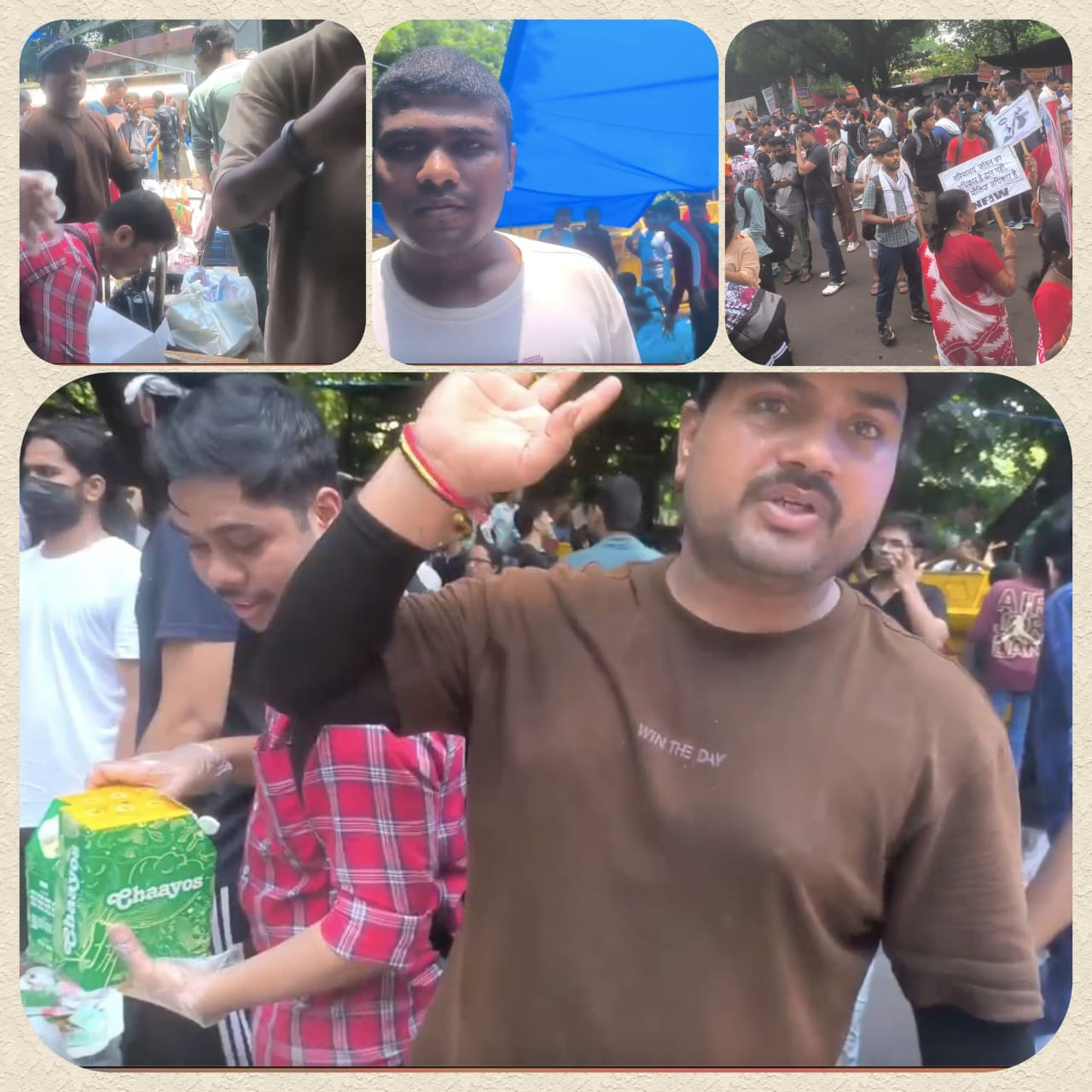
I walked into the protest yesterday simply intending to stand alongside the students for a while. Within minutes, someone had placed two boxes of hot pulao in my hands. Before I had even processed that act of kindness, another volunteer appeared beside me, gently fanning my face in the afternoon heat. Throughout those hours, I lost count of how many times people offered me water, juice, tea, or something to eat. I was one among hundreds receiving the same care. Nobody asked my name. Nobody wanted to know why I had come. Care was offered freely, with an ease that made it feel like the most natural thing in the world.
This generosity came from every direction and asked for nothing back. The volunteers came from different walks of life. Most people I spoke with were from colleges and universities, wearing backpacks and cloth jholas, protesting, serving others, sometimes doing a bit of both. There were also some formally attached to the student wings of political parties. What came through most strongly was the sense of ordinary citizens looking after one another simply because the moment asked for it.
The student leaders addressed the gathering from the stage in calm, measured voices, urging everyone to remain peaceful, stay composed, and keep the protest dignified. There was energy in the air, but it came with real discipline.
At one point, a contingent of police officers entered from one side of the stage. The crowd broke into applause, a long, spontaneous round of clapping that spread across the gathering. I have thought about that moment many times since. Applause is a very human way of acknowledging someone’s presence, and here it felt like an expression of confidence and composure. The students stayed exactly as they had been moments before: peaceful, and committed to the character of their protest.
Everywhere I looked, young people were expressing themselves through different creative means. Some were bent over sheets of chart paper, lettering slogans with sketch pens. Others were painting posters, writing poetry, or talking about constitutional values with strangers who had wandered into conversation. The protest felt as much like a classroom as a political gathering, ideas being shared, debated, and reworked in real time. Education was happening in its broadest sense, right there on the ground.
Every account of hardship I heard, including the beatings many of them had faced earlier, seemed only to strengthen the resolve of those present. As the day passed, the gathering kept growing. More students arrived. More citizens came to stand beside them. More volunteers turned up with food, water, and small acts of service. The crowd widened, and that widening of support stayed with me long after I left.
All hope, all faith, no fear. And a deep trust in humanity.